
UTM Tracking for Small Businesses: Stop Guessing Which Marketing Channel Actually Brings Customers
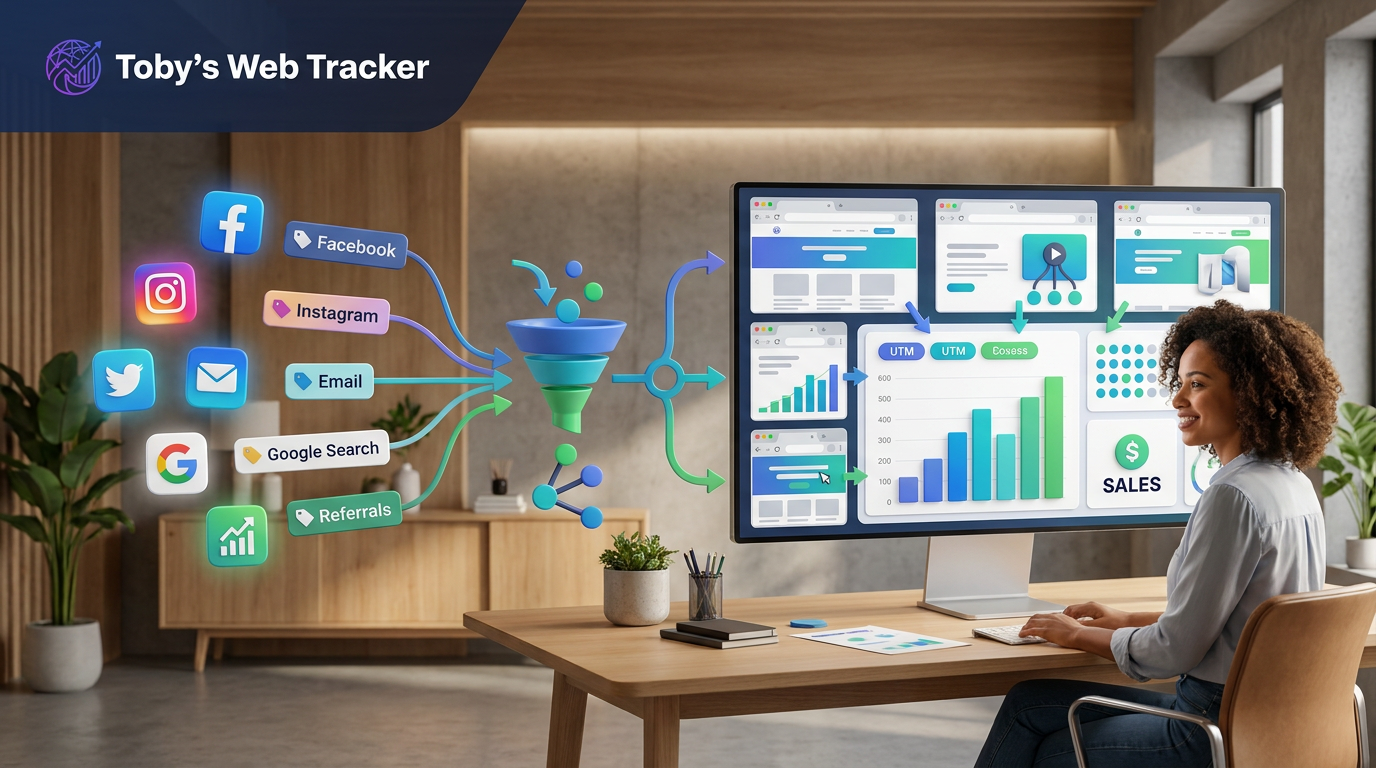
If you’re a small business owner, you’ve probably wondered: “Which marketing channel is actually working?” You post on social media, send emails, run a few ads, maybe sponsor a local event, and the traffic starts coming in. But if you’re not tracking it clearly, it’s tough to tell what actually brought people to your site.
That’s exactly where UTM tracking comes in. It gives you a straightforward way to label your links so you can see which campaigns, channels, and messages are bringing in visits instead of making educated guesses.
What UTM tracking actually does
UTM parameters are small tags added to the end of a URL. When someone clicks that link, your analytics tool can read those tags and show you where the visit came from.
A tagged link might identify:
- the source, like facebook or newsletter
- the channel, like social, email, or cpc
- the campaign, like spring_sale
- the content, like blue_button or header_link
That matters because “more traffic” doesn’t automatically mean “better marketing.” UTM tracking helps you tie visits back to the specific effort that generated them.
Why small businesses struggle without it
Most small businesses promote themselves in several places at once. You might be using:
- Facebook and Instagram posts
- Google Ads
- email newsletters
- text campaigns
- partner referrals
- QR codes on flyers or signs
If all of those links send people to the same page without UTM tags, your analytics can end up lumping traffic together, mislabeling it, or leaving gaps in attribution. Then simple questions become surprisingly hard to answer:
- Which campaign brought the most website visits?
- Which email actually got clicked?
- Are paid ads outperforming organic social?
- Did that printed mailer send anyone to your site?
Without consistent tracking, it’s easy to keep spending on channels that feel active but aren’t doing much for the business.
A simple way to start using UTM tags
You don’t need a complicated analytics setup to get real value from UTMs. The best place to start is with a consistent naming system.
Keep your naming clean
Use lowercase and avoid random variations. For example, don’t use both Facebook and facebook, or spring-sale and springsale for the same campaign.
A practical structure:
utm_source: where the click came fromutm_medium: the marketing channelutm_campaign: the promotion or goalutm_content: the version of the link or creative
Example
If you’re sending a March promo email, your link might include:
- source: newsletter
- medium: email
- campaign: march_promo
- content: hero_button
That way, when visits come in, you can clearly separate that email from a Facebook post or ad sending people to the same page.
What good UTM tracking helps you decide
Once your links are tagged consistently, your traffic data becomes much more useful. You can start making smarter decisions, like:
- putting more budget into channels that bring engaged visitors
- rewriting email subject lines or calls to action that underperform
- comparing campaigns across different platforms
- spotting which promotions drive traffic repeatedly
- cutting back on marketing that gets attention but not action
For small businesses, this matters because every dollar and every hour counts. Clear attribution helps you spend less time and money on guesswork.
Common mistakes to avoid
A few small mistakes can make your reports messy in a hurry.
Watch out for these
- inconsistent naming across campaigns
- tagging some links but not others
- using vague campaign names like
promo1 - forgetting to track offline-to-online links, such as QR codes
- building links manually and introducing typos
The goal isn’t perfection. It’s consistency. Even a simple UTM process is a big step up from guessing.
Try it yourself
The UTM link builder in Toby’s Web Tracker gives you all the parameters you need for precise tracking, without forcing you to share huge, messy-looking URLs. You get the full tracking structure in place, plus a shorter version of the link that’s cleaner to use in posts, emails, and campaigns.
You can try Toby’s Web Tracker free forever for 1 website, or upgrade if you need to manage traffic tracking across multiple sites.